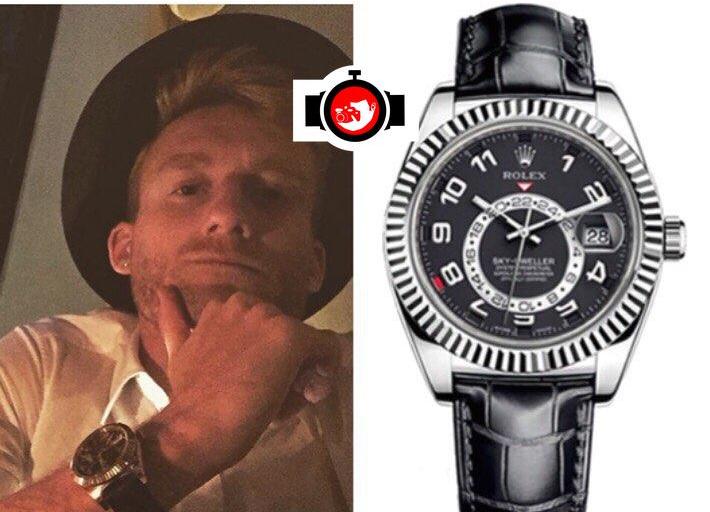
Andre Schürrle wearing Rolex
Rolex Sky-Dweller Black Dial Black Leather Strap White Gold Reference 326139 – André Schürrle


Andre Schürrle is a German professional footballer who made his name as a dynamic, direct winger capable of playing across the front line. Born in Ludwigshafen in 1990, he built his club career across some of Europe's top leagues, representing the likes of Bayer Leverkusen, Chelsea, Borussia Dortmund, and VfL Wolfsburg. He earned over 57 caps for the German national team, but it is one moment in particular that defines his legacy: at the 2014 FIFA World Cup final in Brazil, Schürrle came off the bench, set up Mario Götze's extra-time winner against Argentina, and had already scored twice in the semifinal against Brazil. That tournament, Germany's fourth World Cup title, cemented his place in football history.
The Andre Schürrle watch collection, based on sightings logged here at Watch Paparazzi, points toward a considered and low-key approach to luxury. He has been spotted wearing a Rolex Sky-Dweller Reference 326139 — a piece that sits firmly at the top of the Rolex catalogue. The sighting came after a Champions League group stage match between VfL Wolfsburg and Manchester United, a setting that made the choice all the more telling. Rather than reaching for something flashy post-match, Schürrle was seen in a watch that rewards closer inspection: the ref. 326139 is cased in 18ct white gold at 42mm, fitted with a matte black dial and a black leather strap. It is one of the more formally dressed configurations available in the Sky-Dweller line.
The Sky-Dweller is one of Rolex's most technically complex movements, featuring an annual calendar and dual time zone display via the distinctive off-centre disc and sawtooth bezel. Schürrle's choice of the white gold variant over the more commonly seen steel or yellow gold references suggests familiarity with the catalogue rather than a default to the obvious. For a footballer who retired from professional football in 2020 at just 29, citing a loss of passion for the game, there is something fitting about gravitating toward a watch that prioritises function and craft over visibility.
Rolex Sky-Dweller Black Dial Black Leather Strap White Gold Reference 326139 – André Schürrle