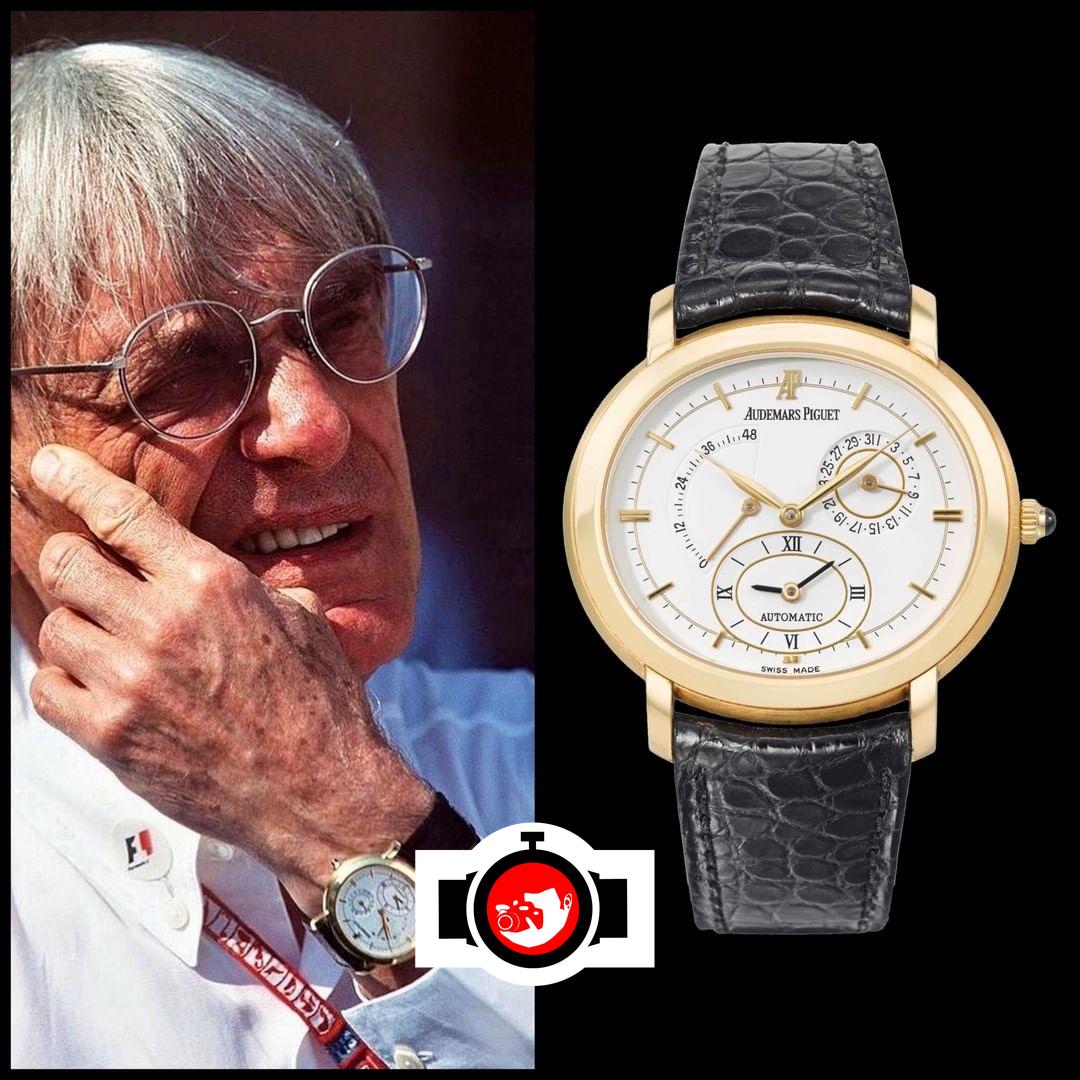
Bernie Ecclestone wearing Audemars Piguet
Audemars Piguet Millenary Automatic Dual Time Power Reserve Yellow Gold Ref. 25778BA


Bernie Ecclestone spent roughly four decades as the commercial and political architect of Formula 1, transforming a loosely organised motor racing series into one of the most lucrative sports enterprises on the planet. As CEO of the Formula One Group from the 1970s until his exit in 2017, he negotiated the television deals, race contracts, and team agreements that turned grands prix into a global product worth billions. Born in Suffolk in 1930, he first entered motorsport as a driver and team manager before pivoting to the commercial side — a move that proved considerably more profitable. His tenure made him one of Britain's wealthiest individuals and a figure whose influence extended well beyond the pit lane.
Ecclestone's taste in watches leans toward the understated end of high horology rather than the conspicuous end of the market, which makes a certain kind of sense for someone who spent decades operating in rooms where the real power rarely needed announcing. The confirmed sighting in the Watch Paparazzi database places him wearing an Audemars Piguet Millenary Automatic Dual Time, reference 25778BA — a yellow gold piece from a collection that Audemars Piguet launched in 1995 and that has always occupied an interesting position within the brand's catalogue. The Millenary's oval, off-centered case design and exposed movement architecture made it one of the more architecturally adventurous references the Le Brassus manufacture produced during that era, and the dual time complication on the 25778BA adds a layer of practical utility that someone logging intercontinental travel for race weekends across multiple time zones would have found genuinely useful.
The Bernie Ecclestone watch collection, at least as documented through public appearances, reflects a preference for pieces with substance in the movement rather than surface spectacle in the design. The Millenary reference he has been photographed wearing is not a watch that dominates a room — it is one that reveals itself slowly, which arguably makes it a more considered choice than many of its contemporaries from the same period.
Audemars Piguet Millenary Automatic Dual Time Power Reserve Yellow Gold Ref. 25778BA