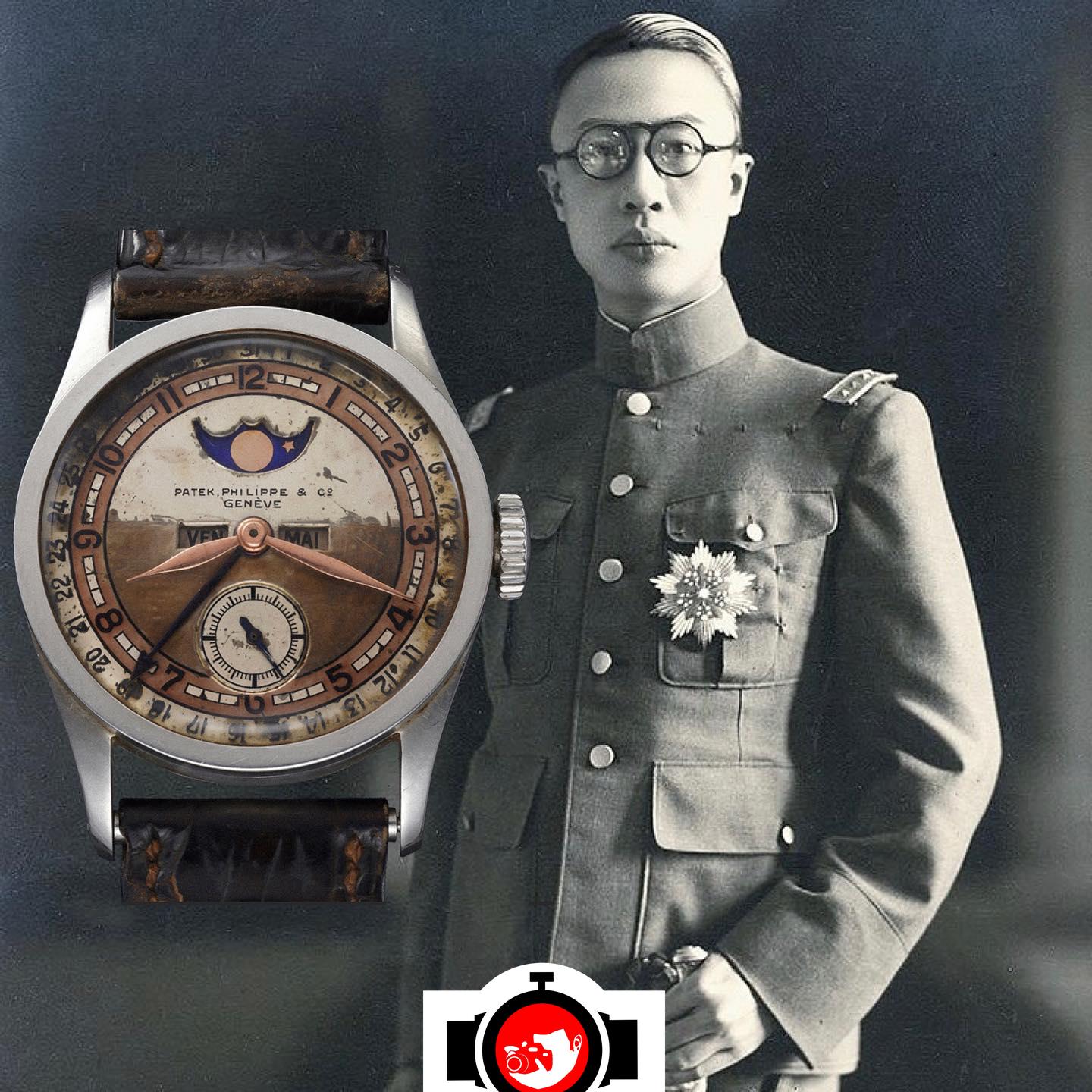
Aisin-Gioro Puyi wearing Patek Philippe
Patek Philippe Yellow Gold Calatrava Reference 96 – The Imperial Watch of China's Last Emperor Puyi

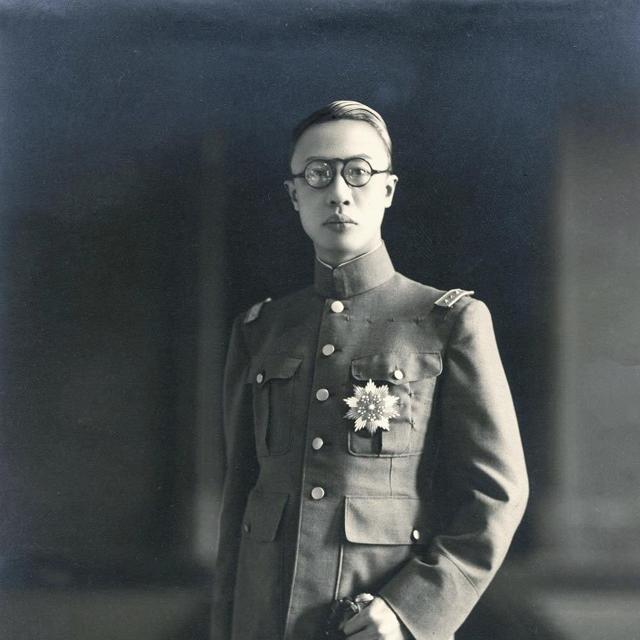
Aisin-Gioro Puyi (1906–1967) holds a singular place in world history as the last Emperor of China, ascending the Qing Dynasty throne at the age of two in 1908 following the death of his great-uncle, the Guangxu Emperor. His reign, nominal from the start, effectively ended with the Republican Revolution of 1912, though he retained his imperial title and continued living within the Forbidden City until 1924. His life took further turbulent turns — a brief restoration in 1917, time as a Japanese puppet ruler of Manchukuo from 1934 to 1945, Soviet captivity, and eventual re-emergence as an ordinary citizen of the People's Republic of China, working as a gardener and later a botanical researcher. His autobiography formed the basis of Bernardo Bertolucci's 1987 film The Last Emperor.
The Aisin-Gioro Puyi watch collection, as far as surviving records and auction history allow us to piece together, centers on a single remarkable object: a Patek Philippe Reference 96. Launched by Patek Philippe in 1932, the Reference 96 was a defining moment in Geneva watchmaking — a rectangular-cushion-cased dress watch that established a visual grammar for the luxury wristwatch that persists to this day. That Puyi possessed one places him among the earliest and most historically significant owners of what became one of Patek Philippe's foundational references. The watch likely came into his possession during his years in Manchukuo, a period when, despite his constrained sovereignty, he retained access to the trappings of high office and maintained contact with international luxury goods.
What the collection reflects, modest in number but extraordinary in weight, is the convergence of two deeply rooted traditions of craftsmanship and ceremony. The imperial court of the Qing Dynasty was built on meticulous ritual and material culture of the highest order, and Patek Philippe's Geneva ateliers operated — and still operate — on comparable principles of discipline and accumulated skill. For a man whose personal history was defined by displacement and the collapse of institutions, the Reference 96 is a quietly loaded artifact: portable, precise, and built to outlast the world that produced it.
Patek Philippe Yellow Gold Calatrava Reference 96 – The Imperial Watch of China's Last Emperor Puyi